


“A less thoughtful and more self-sabotaging statement would be hard to imagine,” Rabbi David Wolpe, rabbi emeritus of Sinai Temple in Los Angeles, told JNS of one of the mayor’s comments.
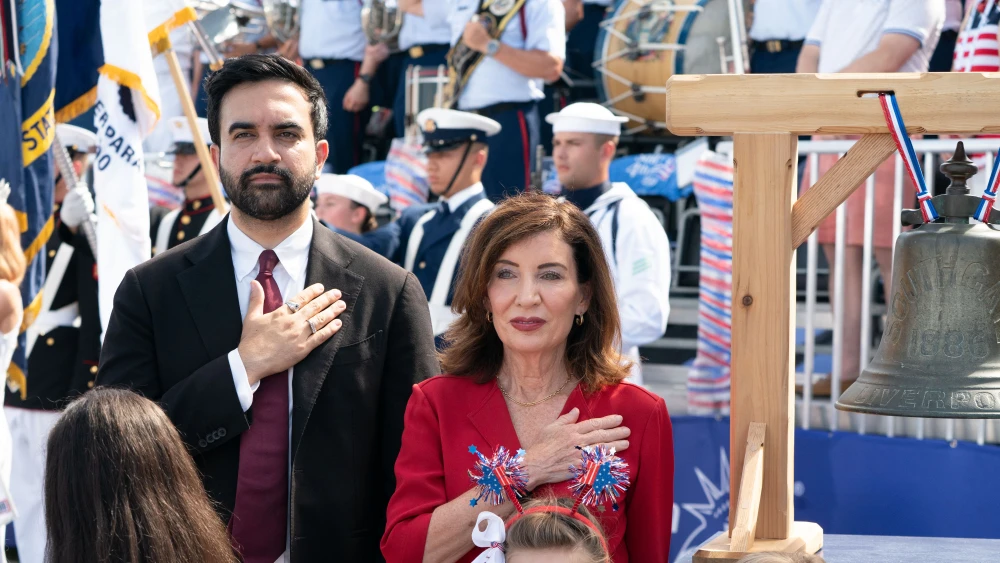
New York City Mayor Zohran Mamdani’s remarks for America’s 250th birthday, in which he decried the country spending “our tax dollars on bombs and bailouts,” Elon Musk as the “world’s first trillionaire” who “hungers for more” and a “health insurance industry that exploits the sick,” were dangerous and in appropriate, rabbis told JNS.
“We see a city of contradictions within a nation of contradictions. We see the wealthiest country in the history of the world—one where children go to sleep hungry while the world’s first trillionaire hungers for more,” the mayor said on Friday ahead of July 4.
“We see monopolies that dominate every industry and oligarchs who buy elections. We see masked agents terrorizing our streets, eating food cooked by our undocumented neighbors before spiriting them away in unmarked vans,” he added. “We see a nation whose immense wealth has been built by those with calloused, dirt-streaked hands— those who toil on factory floors and chisel into stone—and we see a nation that has allowed so much of that wealth to be held instead in the soft hands of a precious few.”
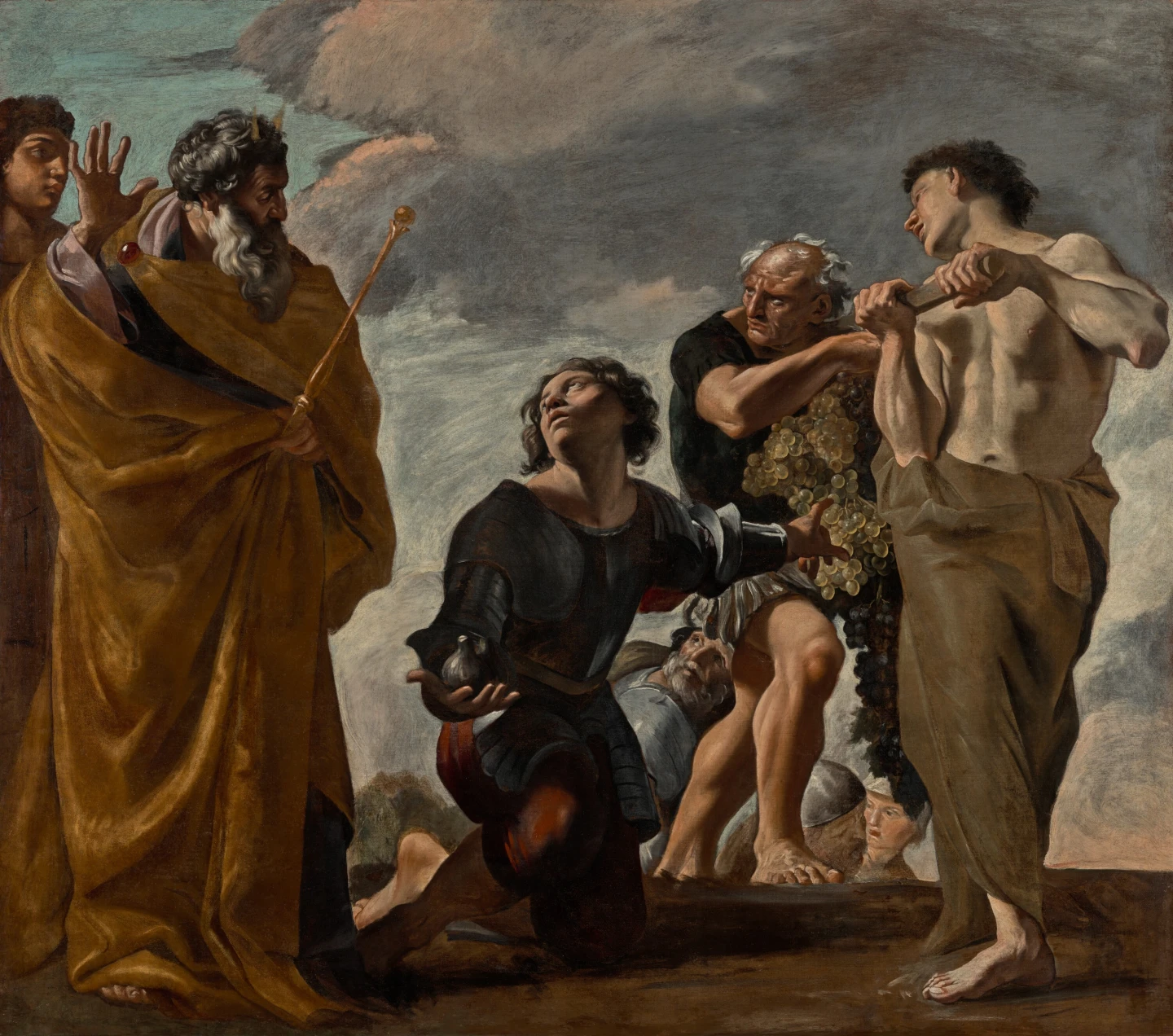
Rabbi Menachem Levine, CEO of Joan Dachs Bais Yaakov–Yeshivas Tiferes Tzvi, a 70-year-old Orthodox school in Chicago, told JNS that Mamdani’s approach, in which he began by referring to the United States as a place of opportunity and “a grand experiment in self-governance,” evokes the tactics of the biblical spies, whom Moses sent to scout out the Holy Land.
The spies returned bearing enormous fruits and told the Israelites that the land was good and then pivoted to information that it was inhabited by giants, who saw the men as grasshoppers. Because the spies led the people to fear entering the Holy Land, God forced almost the entire generation to wander for 40 years in the desert—one year for each day of the mission of the spies—until each person had died before their descendants could enter the Holy Land.
Per rabbinic tradition, the spies “began by acknowledging the land’s physical beauty, thereby lending credibility to their subsequent falsehoods regarding its inhabitants,” Levine told JNS.
“Ultimately, his objective is to dismantle the existing social order,” he said of the New York City mayor. “However, he has unfortunately considerable political acumen and is a significant threat.”
Mark Goldfeder, an Orthodox rabbi and CEO and director of the National Jewish Advocacy Center, told JNS that “Judaism invented institutionalized national self-criticism, so the objection is not that a leader criticized his country.”
“It’s how and why and when,” Goldfeder said.
The Talmud “contrasts two people welcomed at the same table,” Goldfeder told JNS. “One says, ‘Look how much trouble my host went to, and all of it for me.’ The other says, ‘What trouble did my host really go to? He ate his own bread. Whatever he did, he did for himself and his household.’”
He advised reading Mamdani’s speech with that template in mind. “You will see it is built exactly like the second guy’s toast,” Goldfeder said. “Every American generosity gets recharacterized as extraction.”
Those who defend the New York City mayor will say that there is a “some kernel of truth” in everything that he said, according to Goldfeder.
“Sure. The spies Moses sent into Canaan also told the truth. The Talmud points out that slander only takes hold when it opens with truth, and it still counted the spies’ report among the gravest sins in the national record,” he told JNS. “The facts were right. The verdict was the sin.”
Standing on the threshold of the Promised Land, the spies “assembled some technically accurate observations into a case against the entire enterprise,” Goldfeder said. “The mayor did the same thing at the threshold of the country’s 250th year.”
“Judaism never tamed national self-criticism by suppressing it. It tamed it with a calendar,” he said. “There is an entire fast day, Tisha B’Av, set aside for the national indictment, when Jews sit on the floor and read the catalogue of their own failures out loud. And precisely because that day exists, Passover is not allowed to become a seminar on them.”
“Eulogies are barred on festivals for the same reason,” Goldfeder told JNS. “July 4 is the festival, and he went ahead and gave the eulogy.”
Rabbi David Wolpe, rabbi emeritus of Sinai Temple, a Conservative synagogue in Los Angeles, told JNS that it was “foolish” for Mamdani to make the statement that the “powerful have always known their answer” and that “America, in their view, is an arena of supremacy, where only a select few are allowed freedom, where not all are created equal.”
“To speak of the powerful as a block not only betrays the many powerful people who created the rights and economic dynamism and hope that he celebrates but neglects the reality that he is among the powerful,” Wolpe said.
“A less thoughtful and more self-sabotaging statement would be hard to imagine,” he told JNS. “When the Torah says, ‘Do not favor the rich or poor in judgement,’ it is arguing against this exact lumping of people into a category simply to excoriate them.”
Rabbi Yaakov Menken, executive vice president of the Coalition for Jewish Values, told JNS that he is reminded of a different biblical episode when he listens to the New York City mayor’s July 4 speech: Jacob’s prayer in Genesis 32, imploring God to “save me from the hand of my brother, from the hand of Esau.”
Chaim ibn Attar, an 18th century Moroccan rabbi and Kabbalist, explained that Jacob was praying for protection from his enemy Esau even if the latter came to him as “my brother,” according to Menken.
“He is dangerous either way. The same can be said of Mamdani,” he told JNS. “Much of what he says is historically wrong, and his characterization of businesses today is no better.”
Mamdani “admits honestly that Syrians do not come here to escape persecution, yet lists Muslims before Jews among those ‘banished for praying the wrong way,’” Menken said. “There is no comparison, of course. The overwhelming bulk of Muslim experience with persecution is as perpetrators, with ‘infidels’ like America’s Jews and Christians as their victims. But that is a truth he has no interest in sharing.”
Rabbi Daniel Friedman, professor of international relations at Touro University and a rabbi at Park East Synagogue, a Modern Orthodox congregation in Manhattan, told JNS that the notion of American “exceptionalism” requires clarification.
“My family did not arrive by boat, although we saw the Statue of Liberty from the window of the plane,” Mamdani said in his speech. “There is a term so often used to describe our nation and those who have shaped it: ‘American exceptionalism.’”
“American exceptionalism, the conventional wisdom tells us, makes our freedom a little more free, is how we dug the Erie Canal and irrigated the West, is why children in faraway lands grow up dreaming of one day moving here,” the mayor said. “The irony is that the story of America has so often been written by those who were told by others with power and influence and wealth that they were anything but exceptional.”
“We are told that America is exceptional because we are richer, stronger, more powerful than everyone else,” Mamdani added. “The truth, my friends, is that America is exceptional because here, nothing is fixed into place.”
Being richer, stronger and more powerful is not what American exceptionalism is about, nor is it about thinking that nothing is fixed and that the newest Americans hold the “special power” to “determine what America means,” according to Friedman.
He told JNS that the late Rabbi Jonathan Sacks, a former chief rabbi of the United Hebrew Congregations of the Commonwealth and former member of the British House of Lords, differentiated between social contracts and covenants.
“A contract is rooted in mutual self-interest. Individuals cooperate because doing so benefits each person,” Friedman told JNS. “A covenant, by contrast, is a moral commitment, in which people accept responsibility for one another and for a shared future.”
“Rabbi Sacks believed that America’s exceptionalism lay in its covenantal character,” he said. “Unlike many nation-states that were united by ethnicity, language or ancient territorial identity and held together primarily by political institutions, the United States was forged largely by immigrants, who embraced a common moral vision centered on liberty under God, personal responsibility and the dignity of every human being.”