

Defense Minister Katz warned that any Iranian attack linked to developments in Lebanon will be met with a forceful response.

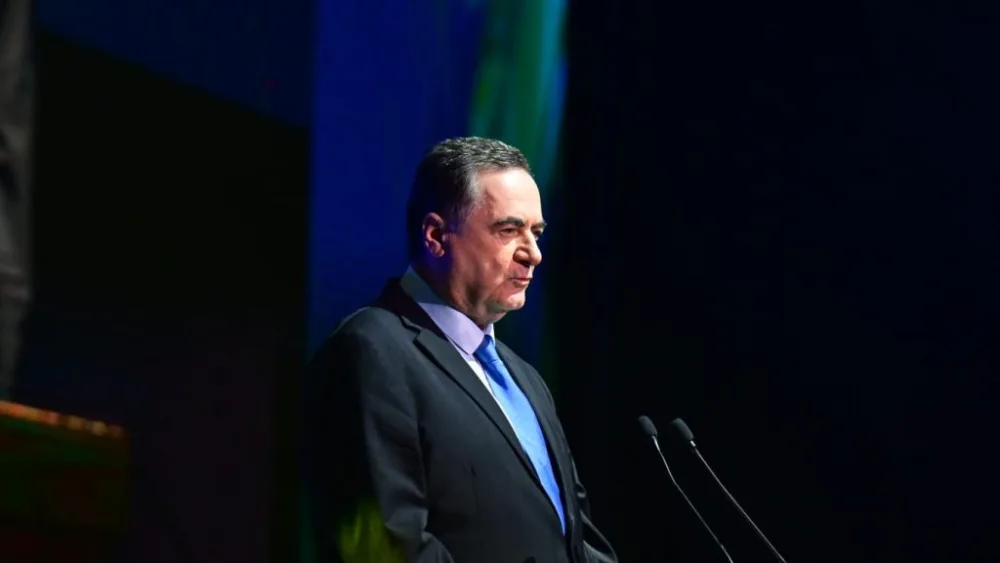
Israel’s policy is for the Israel Defense Forces to remain in security zones across Lebanon, Syria and Gaza “indefinitely” to protect Israeli border communities from jihadist threats, Defense Minister Israel Katz said on Monday, even as Tehran seeks to tie an emerging U.S.-Iran memorandum of understanding to Hezbollah.
Katz said Prime Minister Benjamin Netanyahu and he were “leading a clear policy” under which the military presence would be maintained in Southern Lebanon.
He said the zones would be “cleared of local residents” and that “all terrorist infrastructure, above and below ground” would be dismantled. He added that this would include the destruction of houses in border villages that had been used as terror outposts.
“This is the main lesson from the events of Oct. 7,” Katz said.
He described territorial control and the creation of security zones as one of the key wartime achievements of the Israel Defense Forces.
“We will not compromise on Israel’s supreme security interest and the protection of our citizens, and we will not withdraw from the security zones,” Katz stressed.
He said Netanyahu had conveyed Israel’s position to U.S. President Donald Trump and other senior American officials, and that he himself had raised it with Secretary of Defense Pete Hegseth.
Katz warned that any Iranian attack linked to developments in Lebanon would be met with a forceful response.
Separately, Israeli National Security Minister Itamar Ben-Gvir said Monday that a reported memorandum of understanding between Washington and Tehran does not bind Israel. He said Israel is “not subject to the United States” and described Israel as a sovereign state responsible only to its citizens and soldiers.
Ben-Gvir urged continued pressure on Hezbollah and rejected any withdrawal from areas cleared of terrorist infrastructure, saying Israel must not return to a situation where threats sit on its borders.
Lebanese President Joseph Aoun on Monday welcomed the memorandum of understanding reached between the U.S. and Iran, saying it affirms a halt to military operations and de-escalation in the region, including Lebanon, according to a statement from his office.
He said the document respects Lebanon’s particularity and recognizes that the country’s stability and security are an integral part of any serious effort to cement regional stability, and voiced hope the development will help Lebanon move into a phase of stability, security, recovery and reconstruction after months of suffering.
Aoun said the Lebanese people expect the understandings to be translated into “practical steps that put a definitive end to the cycle of violence and establish a phase of stability, security, recovery and reconstruction.”
The Israeli and Lebanese comments come on the heels of Pakistani Prime Minister Shahbaz Sharif’s announcement that an agreement between the U.S. and Iran to end the war had been reached, with a signing expected Friday in Switzerland.
Trump separately said he authorized steps to end the blockade of Iran, which closed off the Strait of Hormuz. “Ships of the world, start your engines. Let the oil flow,” Trump said in a post on Truth Social.